
Note: Keyboard and mouse activity monitoring is available in all Time Doctor subscription plans where the screenshots feature is enabled. The Activity Summary report can be accessed by all access roles, provided that an Owner or Admin has granted the Regular user access role permission.
TL;DR
Time Doctor tracks keyboard strokes and mouse movements using the desktop application to measure activity during tracked sessions. Screenshots with minimal input are marked as low activity, and the Activity Summary report shows idle minutes and seconds. Specialized input devices — such as joysticks, game controllers, and drawing tablets — are not detected as activity inputs. The specific keys pressed are never recorded.
Understanding Keyboard and Mouse Activity Tracking
Time Doctor reports on keyboard and mouse activity levels while tracking time using the Time Doctor desktop application.
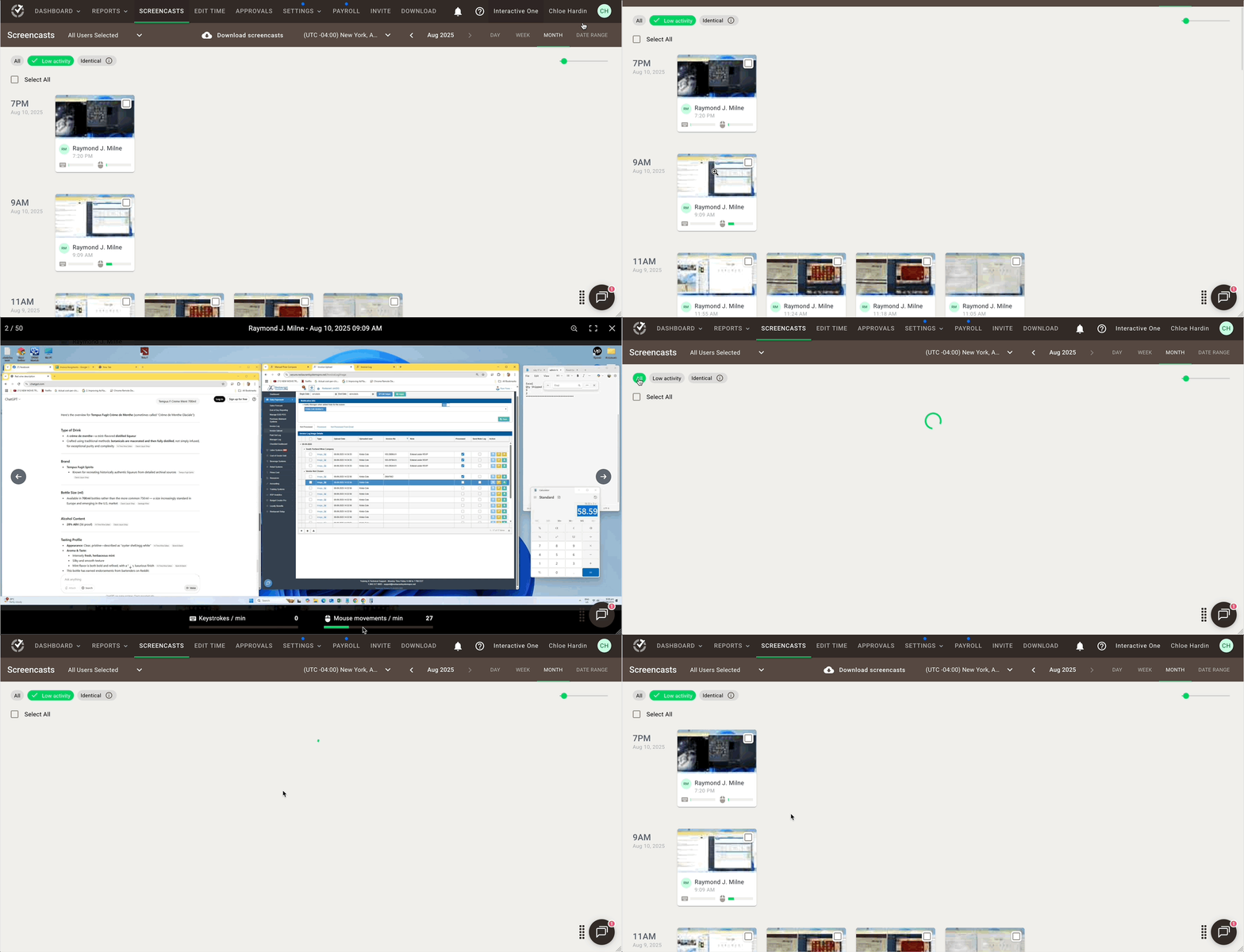
When screenshots are enabled, any screenshot captured during a period of minimal keyboard and mouse activity is marked as a low activity screenshot.
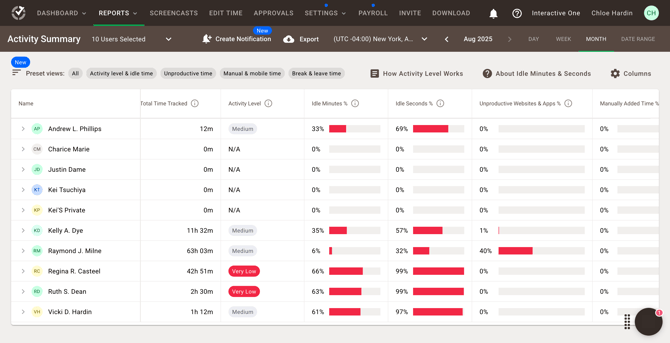
The Activity Summary Report page displays:
- Idle Minutes % – Percentage of minutes with no keyboard or mouse activity.
- Idle Seconds % – Percentage of seconds with no keyboard or mouse activity.
Important Information
Time Doctor is not a keylogger. Tracking the specific keys pressed is considered illegal in many regions and is not performed by Time Doctor.
The desktop application:
- Counts the number of keystrokes and mouse movements.
- Calculates the percentage of minutes and seconds with activity.
- Never records the actual keys pressed or mouse actions taken.
What About Joysticks, Game Controllers, and Other Input Devices?
Time Doctor detects activity at the operating system level by monitoring keyboard strokes and mouse movements. Specialized input devices — including joysticks, game controllers, drawing tablets (when used with pen input only), and other HID (Human Interface Device) peripherals — are not recognized as activity inputs by the desktop application.
If a user works exclusively with one of these devices during a tracked session — without any accompanying keyboard or mouse interaction — Time Doctor may record that period as idle time, even when productive work is actively taking place.
This is a known limitation for roles that rely heavily on non-standard input devices, including game artists, animators, and QA testers.
Workarounds for Non-Standard Input Device Users
The following approaches help ensure that tracked time accurately reflects actual work.
Option 1: Use the Edit Time Feature
Manually log time for periods where only a controller or joystick was in use. Go to Edit Time in the Time Doctor web app and add the appropriate time entries for the affected session.
Option 2: Supplement With Keyboard or Mouse Input
Where practical, perform periodic keyboard or mouse interactions during a session — such as saving a file, switching windows, or typing a brief note. This ensures the desktop application registers ongoing activity and avoids flagging the session as idle.
Option 3: Review Low Activity Screencasts
If screenshots are enabled, Admins and Owners can review screencasts flagged as low activity via Activity Summary to determine whether the idle classification reflects a controller-use period rather than genuine inactivity. For a detailed breakdown of how low activity thresholds are calculated, see Understanding Low Activity Calculation and Reporting.
Should there be any inconsistencies or concerns regarding the article, contact support@timedoctor.com for prompt assistance.